 |
Carole
|
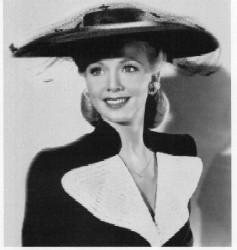 |
Last updated:
|
|
Carole
|
|
7/4/2003
Today, the fifty-fifth anniversary of the last day of Carole's life, I have begun to work out some of the esthetic consequences of her revelation to me. This is not an easy task and I am not altogether confident of being able to carry it out in a fully satisfactory fashion; perhaps that is the case for all real revelations, that they cannot be easily absorbed into preexistent theoretical frameworks however capacious. I like to think that the guarantee to the desiring imagination that Carole provides is parallel with the originary hypothesis that too fixes desire on a single object; the one is the source of the sacred, the sign, and the human; the other, the revelation that the sacred, the sign, and the human are not necessarily fated to destruction. But there is much reflection to be carried out here. I have felt for a while, and certainly in Kansas City, a certain anxiety concerning the mission I have promised myself and Carole to carry out. I hope the theoretical and the practical problems can both be solved and some harmonious blend of the two produce a work that will be a lasting source of nourishment for Carole's memory; but I fear that however intense my desire to succeed I will accomplish no more than my grant applications have accomplished, and that I will produce a work unpublishable except for the usual vanity presses.
It will be useful to see what sustained work on this project can accomplish. Meanwhile, today is a day to remember Carole without turning away from the loneliness and anxiety she hid from those who didn't really know her. Perhaps the bottom line of all this will merely be that I will tell her life story as well as I can and that others will be drawn to honor her memory on my example.
7/4/2003 - 7/5/2003
It is surely a nobler undertaking to modify my anthropology to include what I have learned from Carole than to dwell on my personal psychology. Tonight as I do this I will try not to forget the event that occurred fifty-five years ago tonight without which I would perhaps not--but I hope I would--be engaged in this project. What struck me was Carole's beauty, not her tragedy, and it is right to care about the beauty before the tragedy because the beauty is more necessary than the tragedy, which is nonetheless tragic because it does participate in an order of necessity. Tonight we heard at the Sugar Creek fireworks display forties tunes including Glenn Miller, Woody Herman, Benny Goodman, who appeared in movies with Carole, played by a barely competent band, but one more proof of the centrality to our American identity of the wartime years during which Carole flourished and which her beauty was sanctified by and sanctified in turn. National identity is a mode of symbolic identification, not an essence, and America could have no more beautiful symbol than Carole.
I'm sorry that the LA Times refused to publish my little piece on Carole; that only means I will have to do better to make my case that she is important not just to me but to humanity. Just because she gave up on herself, or as Lilli Palmer cruelly but rightly said once too often played va banque with her life, is no reason for me to follow the crowd that has given up on her. I did not choose her suicide or her posthumous neglect, but they have helped define what I take as my duty to her memory. It is strange but fitting that Carole's is the only grave I have brought flowers to.
7/5/2003
Today, the anniversary of Carole's death, I went through her films with Frank M., who I was not surprised to find knew most of them. I also showed my site to Virginia. More significantly, I have been working on an esthetic analysis meant to justify my interest in Carole, which will be my next or second Chronicle.
Too tired to write further, I can only renew my pledge to pursue my research, even if it involves writing letters and making calls to persons who might have known Carole.
7/6/2003
Not much time to work on my writing today; I was able to finish another draft of the Chronicle justifying my interest in Carole in anthropological/historical terms, but the end still belongs essentially to the former draft, still a bit apologetic about taking an interest in Carole's beauty. There is a whole epistemological shift that this beauty justifies, and that must be clarified: desire suddenly seems not the work of the devil but of Providence.
7/7/2003
I was surprised to receive an answer to my last (6/29) message today from Bryan R., telling me that things were busy and that he would get back to me soon. This is at least potentially very good news, as contact with Carole's family seems to me all but indispensable to this project--the sooner the better.
Perhaps the most difficult aspect of this project to face up to is that however successful it may be in every sense--and there is no guarantee of success in any sense--it cannot be the kind of "theory of everything" that my recent books have attempted to be. However good a case I can make for Carole, she is a figure in history, not history itself. The point of a biography is to situate its subject in history, to demonstrate his indispensability, perhaps his exemplarity, but surely not his exclusivity. A single individual is a model of humanity in general, but only if we understand that the idea that the moral weight of single individual is equivalent to that of the community as a whole must be itself the product of a historical community before it can become a timeless imperative. There is a necessary "overestimation of the biographical object." To be aware of this is to accept the element of personal sacrifice and devotion implicit in biographical research, at least in a case where one must defend the subject's right to have her story told at all. But the ease of this devotion, its value for me which is not merely the satisfaction of some hidden emotional need but itself a mimetic phenomenon, the assumption of a role that I play in all sincerity but that I enjoy playing, is the sign that sacrifice and devotion are socially valuable, giving hope that each individual might himself be the beneficiary of such devotion. We would all like to think that someone will come along to put flowers on our graves.
7/11/2003
With very little free time these last days, I have focused on a text that I had thought would become a Chronicle, but now I wonder if it adds all that much to my previous ones on Carole, and if it would even serve as a reply to the critiques a few women sent me some weeks ago. For the moment, I include it here.
Apologia
Carole Landis is a revelation in the history of public beauty. The institutions that determine popular taste and the multitude who follow them have all but forgotten this revelation, but no truth once revealed can be fully lost. Carole’s tragedy was that the beauty that brought her to our attention was too exceptional to fit into the comforting legends of popular culture within which her career was charted.
The experience of beauty--true beauty, not the mimetic sign of a fictive other’s desire--is the worldly correlate of what we call immortality, the timelessness of the realm of signs. It is an individual, not a collective experience, one that finds its guarantee on the individual’s internal scene of representation rather than on the public scene of ritual from which it derives.
The beauty of art is a beauty of representation, of signs rather than things. Because artworks are composed of human signs, the postmodern spirit that sees natural difference as the product of cultural victimage tempts us to construe them entirely within the cultural orbit of mimetic desire and its deferral. This is, however, an aberration. Mimetic desire as a specifically human phenomenon is founded on appetite, with which it loses contact only at the point of madness.
The prototype of Kant’s idea of natural beauty is the landscape, a source of esthetic pleasure less in itself than by analogy with landscape painting. But by far the most intense experience of natural beauty, indeed, of beauty tout court, is that of human beauty. In classical civilization, the beauty one admired was more likely to be masculine than feminine, but beginning with the troubadours and medieval courtly love, the terms “beauty” and “beautiful” have been applied more and more exclusively to women. Along the same line, since the demise of the Old Regime, the norm of masculine dress has become sober and traditional while women’s clothing and adornment remains attuned to displaying the body in an advantageous fashion.
Some feminists have complained of the “objectification” of women; beauty contests are an obvious target. Yet historically, the increasingly feminine bias of beauty parallels the growing equality of women. Today, when women are arguably closer to equal public status with men than ever in history, young women’s dress seems geared more than ever to the flattering display of the body, particularly the bosom; a visit to any college campus will suffice to demonstrate that women spend much more time, money, and energy on enhancing their sexual attractiveness than men. Given the obvious difference in the respective degrees to which sexual selection has reshaped male and female bodies, we must conclude that, lacking special cultural circumstances, female beauty will always be more humanly significant than masculine.
Nor is this beauty appreciated exclusively or even predominantly by men. Not only do women actively seek out examples of female beauty to imitate; they are touched by it as much or even more than men. Of the many people to whom I have shown pictures of Carole, a far greater proportion of men than women express reservations or are quick to allege some other beauty as a counterexample. To my mind, this difference is attributable to the shame of masculine desire, which interferes with esthetic judgment. Interest in women’s bosoms is particularly vulnerable; efforts to avoid it sometimes dominate whole historical eras, such as the 1920s, during which time men’s real tastes in women’s bodies could hardly have undergone so radical a mutation. Women, unencumbered by male embarrassment, are much more ready to acknowledge female beauty when they see it.
The central implication of Carole’s revelation for my theoretical model of the human is a proposition I had taken for granted without reflecting on its consequences for originary anthropology: that, because the imaginary joys and sufferings that are the content of our fictions are grounded in real experience, the oscillation of attention between the sign and its imaginary referent that defines the esthetic is guaranteed by our faith in the possibility that such a referent could wholly satisfy our desire. In the history of the public imagery of beauty during its domination by the Hollywood movie industry, say from 1920 through 1980—although a less exclusive form of this domination is arguably still in effect—I would claim that only Carole fully justifies this faith. The origin of the human is a singularity, a single instance of collective desire for a single object. This one woman’s public beauty stands as a guarantee that, however paradoxical may be the concept of “fulfilled desire,” we can conceive in the presence of her image an idea of desire fulfilled.
Desire is the stumbling-block of the esthetic. Kant rightly saw that the esthetic experience is not linked to appetitive satisfaction and is therefore “disinterested”; but once desire has been eliminated as a motivation, the principle that makes us call a painting, a sonata, or a narrative “beautiful” is lost. What distinguishes the beautiful object from the merely desirable one is its provocation of a return of our attention to the image from its imagined referent; we are not incited to any practical action in the service of our appetites, merely to a renewed contemplation that is nonetheless inhabited by desire. In the moment in which we experience beauty we return to the image, real or reproduced, rather than proceed immediately toward the fulfillment of desire; beauty defers appetitive action.
Art operates through the creation of a utopia of desire that, whether or not it is shown as realized within the artwork, can never be actualized substantially. Tragedy is more profound than comedy because it thematizes this impossibility; comedy is more realistic than tragedy because in real life we do our best to avoid this thematization: except on the extreme fringes of the mensonge romantique, we marry and live more or less happily ever after without challenging sacred taboos. In either case, however, the esthetic utopia of desire is the source of meaning for our private lives, just as communal religion promises our spirit accession to the eternal realm of signification.
What I have learned from Carole is that this utopia has its objective correlative in the public as well as in the private world, that it is indeed possible for a woman “in the public eye” to be truly beautiful, so that we cannot conceive her any more desirable than she is and must return to her image to reassure ourselves of the existence on earth at a specific historical moment of Carole Landis herself.
What defines Carole’s historical specificity is, in the first place, the nature of the traces we retain of her existence. If beauty is to have cultural significance, there must be means to preserve and communicate it to those who have not seen it at first hand. In the case of human beauty, the plastic arts, curiously enough, are not adequate to this task. A painting or sculpture, however closely it may reflect the objective reality of its model, is the product of an esthetic will to which the beauty of the image must in the last analysis be attributed. When we refer to the beauty of the Mona Lisa, it is Leonardo’s painting we are discussing, not some fifteenth-century Italian noblewoman. The possibility of preserving a image of human beauty adequate to its object arises only in what is famously known as the “era of mechanical reproduction.” The fundamental difference between the esthetic of photography and that of plastic art proper is that a photographic portrait, however beautiful “in itself,” presents itself as the image of a real person, unmediated in its detail by human intention, and takes its power and poignancy from that fact.
It hardly needs remarking that Carole’s beauty was not simply biological; the beauty of a photograph of Carole is that of a total package that includes cosmetics, hair styling and coloring, clothing, and jewelry as well as such external elements as lighting and, no doubt on occasion, retouching. In the glamour photographs that Carole posed for from the beginning to the end of her career, cosmetics and adornments are more than beauty aids; they are signs of reverence that affirm the photographic subject’s transcendental significance. Carole’s extraordinary beauty is public and even publicitary; her photographs exist to be distributed as advertisements for the star and her studio. The commercial intention of these photographs, far from tarnishing their “aura,” is indispensable to it; it is what makes them objects of public beauty. (Carole’s public status once established, “private” snapshots then take on the aura of showing the star as she really is.)
* * *
I would not be writing about Carole merely because she is a beautiful and talented actress slandered and unjustly neglected by film history. My experience of Carole is of someone unique and it would be unfaithful to that experience not to begin from the premise of her uniqueness. This leads to an anomaly that must be faced head on. How can it be that only one person in the period when Hollywood generated images of public beauty has given us a truly beautiful public image, and, if this is so, that this person and her images are nevertheless so nearly forgotten today?
A woman’s beauty includes her body, which the glamour photograph can only suggest--with a few possible exceptions, such as the infamous Marilyn Monroe calendar, nude photography before the 1970s was either art photography or pornography, neither of which are modes of what I call public beauty. The subject of the picture says to us, “take this image as a representation substituted for what I cannot show you, but which I promise you is there.” Yet the typical glamour shot (classically, an 8x10 black and white glossy), even of the presumably sexiest and/or most beautiful stars, is coquettish--it promises something it will not deliver. The difference between the physical beauty the subject’s dress and comportment promise us and what our objective judgment concludes is really there is a measure of the mimetic element in our cultural perception; the spectator is expected to sacrifice his judgment on the altar of cultural mimesis to the (implicitly collective) suggestion emanating from the picture itself. The spectator must supplement the image’s failure to fulfill its promise (a relative failure, to be sure, but the promise is of “absolute” satisfaction) with his knowledge of the star’s film roles, perhaps of her off-screen life. It is an unwritten law of the genre that we cannot do away with the mimetic supplement and experience real fulfillment of the promise, that is, the signs of a beautiful body, without abandoning the glamour photograph for the lesser, more openly erotic genre of cheesecake. The success of the Hollywood publicity machine in determining our sense of public beauty is a tribute to the effectiveness of this sacrificial operation.
It was in the 1930s, with the coming of sound and the consequent expansion of the film audience, that the studios and their publicity operations acquired their mature form. An early byproduct of this expansion was the 1930 Hays code that strictly limited sexual display, imposing the photographic esthetic of promise within which Carole’s career was encompassed. I shall take as paradigmatic of sexual beauty in this period three stars: Jean Harlow, Mae West, and Greta Garbo.
Jean Harlow’s screen image was typically (e.g., in The Red-Headed Woman [1934?]), that of a woman undeterred by
morality from exploiting her sexual value, whether in exchange for wealth or other social benefits, or simply for sensual pleasure. The salient characteristic of Harlow’s body image is that she is often shown not wearing a brassiere or other constraining undergarments; her character as a “loose woman” is exemplified by this particular looseness. Harlow’s dress, with occasional revealing poses, suggests her body’s sensual presence much more explicitly than standard garb, without however making its form explicit.
Mae West, Harlow’s fellow sex symbol of the 1930s, presents her body most often in the opposite manner: tightly squeezed into a corset or the equivalent. Where Harlow suggests not so much her body’s form as its presence, West discourages us from guessing at her real contours under the restraining clothing. Neither suggests an unambiguously beautiful whole; both point to a behavioral narrative of “looseness” or easy availability as a supplement to the image. At the opposite pole is Greta Garbo, who, disdaining to present a sexual image of her body to the public, scarcely presented any at all, preferring to limit her photographs to her face or appearing draped in flowing, formless clothing.
The absence of beautiful implicit bodies in these images stands in contrast to the full figures of the fictional “Petty Girls” or “Vargas Girls” of the period. (One revelatory comment about Carole was that she had the body of a Petty girl.) Those who purveyed the images of real movie stars were reluctant to obviate the cultural mimetic effect by not just promising but delivering a truly beautiful body; whence the exceptionality attributed to Carole throughout her career. Carole indeed had an exceptionally beautiful body, but had her example corresponded to the generally accepted criterion of public beauty, other actresses of similar body type would surely have emerged. As it is, despite all the hype about various actresses’ bosoms, Carole remained in a class by herself; witness the catty remark of Esther Williams (an actress noted for her figure) that Carole had such a full bosom one wondered how she could stand erect.
When Carole was starting out in 1937-38 she was much in demand for cheesecake photographs, which made more or less anonymous use of young women whose figures were both more voluptuous and less hidden than those of genuine film stars. Although this kind of work was felt to be half way between legitimate photography and pornography, its iconography was quite chaste by our standards. Very little of the bosom was shown; it was the legs that received the most attention--another term for cheesecake was “leg art.” Long after her early days in Hollywood, Carole continued to pose for such photographs on occasion, no doubt in good-natured acquiescence to the demands of photographers. One way of describing Carole’s place in the history of beauty is as the unique case of a cheesecake model who became a movie star.
* * *
The canard that voluptuous, untalented Carole got into film by seducing X, Y, and Z is not only slanderous, it begs the question of why no other women with Carole’s body type were found in Hollywood films. Carole herself was exceptional, but the key to her historical role is that her career benefited from an unusual institutional context.
Carole combined a beautiful body and face (perfected by a discreet 1940 nose job) with a seemingly innate grace and poise. In a Photoplay article that appeared in November 1948, four months after Carole’s suicide, her older sister Dorothy recalls that she and a friend would sit on the school lawn and listen to Carole sing, “enthralled by her singing, her grace and beauty.” In addition, Carole was talented in a variety of areas: she was a fine singer with a sweet and rich if not powerful contralto, she had an excellent comic sense, and she applied herself very seriously to acting. As she demonstrates in her early films, Carole was also quite athletic; she was selected for 1 Million B.C. on the basis of a running test devised by old D.W. Griffith, who thought the part needed someone who could “run like an athlete, a deer” rather than “an ordinary girl.” How many of those who blithely dismiss Carole as “a lovely torso, not an actress” (Time) realize that in her first four films she plays a prehistoric girl, a pampered housewife transformed into a man, a nightclub entertainer caught up in Nazi spying intrigue, and a circus owner who sings and even performs rope tricks? Throughout Carole’s career, although her films were often panned, she herself received generally favorable reviews and was never criticized for bad acting.
From the institutional side, the one word that explains the inhabitual openness of the film world to Carole is war. Carole’s film career began and flourished during the Second World War, which started, as Americans tend to forget, in September 1939. Even before Pearl Harbor, Carole was making war films and visiting military installations; she starred in Mystery Sea Raider in 1940 and Cadet Girl in late 1941, which reproduces one of Carole’s real experiences of singing on a military base in uniform before 15,000 cadets. WW II obliged the “bourgeois democracies,” the United States in particular, to affirm the superiority of their social order over Axis despotism. The thirties had been a time for the distracting narrative of coquetry; war was a time for the genuine article.
Carole’s devotion to the war effort was legendary; she visited both theaters of the war and tirelessly traveled the US, selling war bonds, singing, dancing with the men, and visiting barracks and hospitals, doing her utmost to speak to every soldier in person. Carole herself was aware that her greatest gift to the fighting men was a vision of beauty, offered under circumstances where false promises were inappropriate.
The postwar period was less happy for Carole; the age of the postmodern critique of difference, however beneficial to society’s victims, was not one in which the centralizing force of beauty could be frankly celebrated. Today the victimary paradigm that makes collective resentment the primary criterion of social justice appears to have run its course. Now that we are forced to defend our way of life against the destructive forces of those who make victimhood their alibi, I think we are ready to give a place in our history to Carole Landis, the incomparable American Beauty.
* * *
The great lesson of the twentieth century was the triumph of liberal democracy over both left- and right-wing utopias that claimed to replace the anarchy of the market system with a rational, conflict-free social order. The freest and most prosperous social order is founded on the recognition that, because our mimetic nature makes us as different as it makes us similar, peripheral exchange is more effective in mediating our differences than centralized uniformity. It might seem to follow from this recognition of difference that such a society could not be united by a common image of desire. Yet this society’s inherent optimism turns on the faith that our desires are mimetic elaborations of underlying appetites that are ultimately faithful to their natural paths of satisfaction. Beauty like Carole’s is not perverse; it does not offer to satisfy our desire, as no image can, but rather to show that there are indeed objects on earth that can satisfy them. The free circulation of desire leads not to a vicious circle of mimetic decadence but to a dynamic equilibrium between desire and the natural means available for its satisfaction. Market society is never without problems, but to solve these problems, one must first have a positive image of the society that is attempting to solve them.
To look at Carole is to realize that the world is a wondrous place whose reality outstrips our desiring imagination. Carole herself knew this and she gave of herself and her beauty with unstinting generosity. Would that we all could merit the inscription on Carole’s grave in Forest Lawn Cemetery:
To our beloved Carole whose love, graciousness and kindness touched us all--who will always be with us in the beauties of this world until we meet again.
* * *
I should mention that I did hear from Bryan Ridste that he would "get back to me soon." I certainly hope so. Getting in contact with Carole's family would add a whole new dimension to this project, which is so intensely personal whatever its theoretical implications.
Tonight Gabriel and I watched the "Pin-Up Girl" number as well as Having Wonderful Crime. I wasn't very certain what his reactions were; but I found Carole as ever infinitely endearing. She is beautiful and neither she nor her audience have any doubt of that; yet (is it "yet" rather than "thus"?) there is always a touching precariousness and vulnerability even at her most insouciant moments; partly no doubt because we cannot forget her suicide, or when she says she should get married more often, her failed marriages, but it is not the pathetic narrative that is the secret of her fragility but that same sincerity in giving herself that she could never make last in her marriages; she wants us not just to find her beautiful, she is fully confident of that, but to find in her the solace we could never find in real life. I think my sympathy for Carole comes from the fact that my own life is happy enough for me not to need this solace and thus to be able to appreciate, to feel this generosity and to experience the poignancy of not being able to respond to it. Carole is so beautiful because she glows with the desire to make her viewer happy; what she says in her little pinup song ("I'll keep on wearing less and less / If it can bring you happiness") is the deepest truth, not of her body but of her soul, which she so unselfishly bares for us. In too many of her films this generosity is limited by her role, although there are nearly always moments when it emerges; in Crime it is constantly present, creating a delicious comic counterpoint to her supposed but so obviously unreal love for George Murphy.
Perhaps this is as close as I have come to explaining what I can only call my love for Carole, which is the second half of a reciprocal interaction, she having given me, as one among uncountable many, such love before her death that I feel I owe her a lifetime of care. It's all done so light-heartedly but how can the spectator miss it? It is the crowning secret of her transcendent beauty.
7/12/2003
This afternoon while driving home from Costco, listening to a Bach suite and to the thuggish base in the next car, I thought that art and beauty are really two different things, and that the categories of beautiful and sublime hardly do justice to our esthetic sense. As I have already said, the beautiful and the sublime should not be separated, as they assuredly are not in Carole; but thinking about beauty obliges me to reevaluate the entire set of categories that apply to the esthetic. My analysis of the esthetic as an oscillation between the sign and its referent strikes me as unimpeachable; but beauty as a separate category requires something more that I now feel the need to capture.
To say that a woman is beautiful is equivalent to saying that she provokes in whoever sees her an esthetic effect, as if she were a sign of herself; one stops to contemplate her, desire (which is not simply "sexual") constructs an imaginary scene of presence, but the presence is only available through the contemplation. Someone less beautiful will produce a weaker effect; someone disagreeable to look at produces the opposite effect of discouraging contemplation; the beautiful and the ugly both "turn heads," but in opposite directions. Yet all that provokes esthetic oscillation is not beautiful, and it isn't sublime either. Popular art is ipso facto not beautiful; the expression of resentment cannot be beautiful. It is compelling because we want to participate in the destruction of our enemies--which is far from the same as wanting them to have been destroyed.
This is another argument for the impossibility of Carole; how can true beauty emerge in a world of teases? If popular art is about discharging resentment, what in Carole's image performs this function? The tempting answer is to refer to I wake up screaming, where it is Carole's beauty that is the target of resentment. But one shouldn't neglect this beauty itself; and by doing so, I must revise, as with so many other things, the purely negative conception of the popular.
Think of Carole during the war, singing to hundreds of soldiers, perhaps a song like "I'll settle for you" from Cadet Girl. Beauty in this context offers the possibility of conceiving oneself in a utopian world that transcends one's social limitations. If Carole is singing for me, then I can participate in the same esthetic experience as anyone, however rich or famous. (Carole's wartime marriage to a soldier should be understood in just this context.) "Disinterested" contemplation would be content with the esthetic effect, where popular culture adds a comparative element, as in all celebrity worship: "my" celebrity is prettier than my wealthy neighbor's girl. The irony of "I'll settle for you" or "I'm your pinup girl" lies in the impossibility of real reciprocity with the individual spectator. Carole will settle for me as she will settle for everyone else; one at a time, we are not prima facie worthy of her, but she's willing to accept us nonetheless. Behind the irony is Carole's real desire to give her beauty to each member of her audience and thereby to console them for their anonymity. Thus one possibility of popular culture is to raise up the low rather than tearing down the high. This is a point that requires further reflection.
7/13/2003
I spent a good part of the day scanning 30-odd images of Carole, most unfortunately Xerox copies of photographs (some of which will be replaced by real photographs shortly). Carole has a great variety of "looks" that accentuate different facets of her character; for someone who never reached thirty, she seems to have evolved a great deal. Once one has seen the stunning beauty of her early twenties one can appreciate better the more mature loveliness of her later years; although there are some later portraits, associated with her "English" period, that betray a kind of large-mouthed gauntness hard to explain in someone with such exquisite taste; why would Carole accentuate her mouth with dark lipstick and let it dominate her face? Does this reflect some health problem? But with these few exceptions all images of her are beautiful, in many different ways; and I come back to the idea that her beauty begins with her body that gives her confidence to experiment with different looks of face and hair, and of course clothing styles. Carole is at ease along the entire spectrum from showgirl to lady, as though there really isn't any difference (in Turnabout, to give credibility to her spectacular beauty--no girl of "good family" could possibly be so desirable--she is made to refer rather awkwardly to a past as a showgirl.)
Of course this time-consuming activity is not exactly research, the problem being that it's not clear what to look at. I will go through some more files at the Academy, and there remain Fox files and some scripts at UCLA and USC. Glancing at some of Frank S's material leads me to wonder where he obtained his information (how does he know that she got the name "Landis" from a sports headline when she always says in interviews that she found it in the phone directory?) He at least gives a bibliography, but never refers to it. It's a shame that the people who have worked on her don't want to or can't provide me with any information: Crivello, and now Austin, can't or don't want to tell me anything, and Frank S who has probably done the most research of all neither publishes it nor shares it. I suppose I shall have to quote from his website, which is in any case in the public domain.
I have looked at a few books about "beauty" and even a couple on "the breast" but there is nothing much beyond clichés about "social construction." I know I read a book a year or two ago that gave a more objective account of what we find beautiful: of course it's not "socially constructed" except in the most superficial sense. On the contrary, the "social construction" only works because it is more or less perversely opposed to our natural tastes. But one shouldn't expect such subtleties from the kind of people who write on this subject. It's a shame, though, that Carole's beauty is so little recognized, even by people who should know better. There is a horrible irony in the fact that Carole gets dismissed as a "studio hooker" where MM is adored as an icon of beauty. Anyone who wants to appreciate women as men's equals should respect Carole as an intelligent and reflective individual who could hold her own in any conversation and above all whose incarnation of womanhood is always full of intelligence and elegance. No woman could cheapen herself by following Carole's example, whether a salesgirl or a university president; I'd rather not say what one calls someone who follows Monroe.
I will have to pursue the ideas on esthetics sketched in the previous entry; scanning is fun but it's not doing Carole as much of a service as demonstrating why she is important both in the history of beauty and in that of Generative Anthropology.
7/14/2003
Aside from scanning another 8 pictures from magazines, I more or less finished my next Chronicle on Carole, which has been very difficult to write and still is not altogether satisfactory. I have to be more assertive and less apologetic both about Carole and about beauty in general; the centrality of beauty is the contrary of the victimary: it offers a felt justification for the scenic structure (rather than for hierarchical mastery of the scene). Now that I have sketched some historical parameters, I should try to deal with the strictly esthetic problems raised not so much by Carole's historical role as by the focus on beauty in general that she inspires.
What we might consider a decline in public taste between the forties and today reflects the higher levels of resentment that popular culture must contend with in the postmodern era. It remains to be seen if things will improve in the post-millennial period. There is a left-wing rage today that reflects among other things the Democrats' loss of political power and that influences the culture; so far the world's resentment has generated among Americans divisiveness rather than solidarity. Is this the agony of the victimary or just a more virulent version of the same old thing? A patriot like Carole today would have half the country against her; in the purity of her sentiment, she lived in a privileged time. One more reason why we shall never see her like again. Another is plastic surgery; interestingly, Carole had a bit herself, but it was a finishing touch, not a wholesale reconstruction. Only the irreversible is sacred, but the market continually makes the irreversible marketable.
About whom will anyone any more claim truthfully to have been "enthralled with . . . her grace and beauty"? Time stands still, and I can picture those girls in San Bernardino in the early thirties, listening to Carole and finding the world a lovely place.
7/15/2003
I finished my uploads of Carole's film songs (there are now 12 clips averaging about 2 minutes a piece: less than half an hour of Carole! I didn't include the fragments from Moon over Miami), put her pictures in the album, and am now ready to start dealing with the data by constructing a timeline that eventually might find a place in the book as a substitute for chronological narration; it could introduce a tightened-up version of this "diary," for instance.
Considering my need for information about Carole, I am struck by my reluctance to examine anything connected to her suicide; my intuition tells me that this will be somehow destructive of my project. A chapter about the suicide is probably inevitable, however, at least to express my views on the subject. At any rate, Carole was a complex person and it's not doing her a service to simplify the complexity in a flattering direction. Her weaknesses were all those of excess generosity rather than selfishness, giving herself too much too soon. It must have been something a bit terrifying to have Carole in love with you, all that beauty and energy suddenly at your service. By chance or by design, they never lived with her very long; she always spoke about her loves from afar.
I am more a writer than a researcher, and it frustrates me that I can't just begin writing on this project before I have gathered all the necessary material. When I was younger, I would have had more time, but would I have been able to appreciate Carole? A propos of appreciation, I thought I should include here a message I sent my friend Bill, who questioned my insistence on Carole's uniqueness:
I think you should turn the question around: we are all unique. Maybe Ben Jonson or Kyd or Marlowe is second to Shakespeare, but that's not how one studies Shakespeare, or even Kyd or Marlowe. Each person who contributes to history has a *unique* role, although nearly everyone acts within previously defined professional categories.
The question isn't whether Carole is unique, but how far that uniqueness goes; there we might disagree. But I think it's significant that she is constantly, (obsessively?) referred to as beautiful, curvaceous, lovely, pretty, full-figured, distractingly desirable, what have you, not to speak of more vulgar terms. Her best film roles play off this distinguishing characteristic (I've talked enough about I wake up...). She is the only star (even if she was never the star she wanted to be) with a body like hers - not just a biological body, but poise, grace, unemphatic elegance. That was her blessing and her curse.
Marxists used to try to write history to the exclusion of individuals; but clearly if Napoleon--or Shakespeare, or anybody--never existed things would have been different. It's not a matter of deciding who was second most beautiful. Rita Hayworth was beautiful enough, but she didn't have what Carole had (and she didn't get malaria singing for the boys either). Watch Rita's seaside dance in a 90s bathing suit in My Gal Sal and then Carole's I'm your pinup girl and tell me if you can't see the difference - in wit and charm as well as physical beauty. This doesn't mean Rita was "second best" - she had a public charisma Carole didn't have. Carole couldn't have played Gilda; it would have been meaningless for her to say, as Rita did, that men went to bed with Gilda and woke up with her. No role could make Carole seem more desirable than she actually was; but that is a limitation on an actress. (She comes closest to this in Scandal, which is probably why this role appeals to you so much.) Last night I saw Olivia de Havilland in The Heiress; try casting Carole in *that* role!
We are all human, but each of us makes a unique contribution to the world; in some cases, that contribution is great enough to warrant writing a book (one could make a case for at least an essay on nearly anyone--remember those Reader's Digest Most Unforgettable Characters? Corny, but...). I think Carole was quite an unusual person; the more I learn about her the more I am struck by how different she was, and tried to be, from her peers. Ultimately her inner strength failed her, but it carried her a pretty good distance.
We can't know what the world would have been like if Carole had never existed; I'll leave it to the so-called possible-worlds theorists to deal with that one. But now that she has existed, with hindsight I would answer that question by saying that the world would have been poorer for not having actualized the possibility of her existence. I hope some day people will say that about you and me.
After all the scanning and recording, it's about time I did a little serious writing; I'll try to pick up my esthetic reflections where I left them a week or so ago. Since this is only my second day by myself I should probably not despair of having the time to accomplish this project; I should think of the real scholars who labored for years without the benefit of copiers or computers,l or even ball-point pens. Tomorrow I should already be able to make some progress.
7/16/2003
No time to write anything, but today I had a long & rather encouraging conversation with Gerard about the project, which he thinks is feasible. This evening wrote a Basic program to set up a chronology, which I can refine but even in its present state it will permit me to add data and get a better idea of the order of the events in her life.
I reread my notes from the Academy etc. and was again moved by reading the accounts of her by her secretary and sister written after her death. There is a human decency and simplicity about Carole that beauty aside is surely very rare; a total lack of vulgarity combined with a total lack of snobbery. She incarnates the democratic ideal, just as old Harry Truman did. "Our lovely lovely Carole" is a living reality that will touch my heart for the rest of my life. Not merely her slanderers, who are easily dismissed, but those who praise her as one among many miss the point of her unique beauty of body and soul, which was in different ways recognized during her lifetime, but is easy to forget for those whose tastes are determined by the "beautiful" rather than the beautiful. Carole was a creature of publicity but she represented truth in advertising.
I must have said many times how frustrating yet exalting is this mission to grant Carole her rightful place in history; if it were less difficult and more easily rewarding, someone else would have done it by now.
One text I found in my notes is this little lyrical reflection:
Shame and salvation, ensnared and exalted by Hollywood’s sacred vulgarity; how can I express my gratitude for having left while others live the image that makes me imagine you immortal? Beauty is lived oscillation between life and eternity. When I look at you I would give my life to bring you back to life; the impossibility of sacrifice is the pain of the achingly beautiful.
7/17/2003
Today I added a number of entries to my chronology (and a few features to the program), up to year 1943 from my year file; but there is much more to be added concerning film production, some of which can be done cut and paste. I printed out all my library notes, combining the Academy material in three files: films, miscellany, and Special Collections, which I then printed out. It's mechanical work but it should lead to some interesting rapprochements; Carole was away from the studio quite a bit for shows, radio programs; it would be nice of course to have some written communications by her on these subjects.
I will have to postpone until tomorrow anything like theoretical reflection on this project.
7/18/2003
Another day wholly devoted to this project, which is I suppose advancing, although time spent is not proportional to information gained. I spent the afternoon at the Academy where I got nothing looking through the files of Nolan, O'Brien, Zanuck, Roach; nothing much in Harrison's either.
I did obtain an article from Movieland 10/48 by one Crawford Dixon who spoke to her two days before her suicide; his explanation is that "she had seen through the illusion of life. She was jaded. She knew all there was to know about men." Earlier in the article Dixon speaks of her as a "playgirl" who "seemed to consider men a bunch of little boys she could amuse and entertain without too much effort." My other discovery was that George Jessel, whom I always considered one of the more repulsive figures in show business, claims to have had a long-standing "affair" with Carole. I do find that one hard to take; Harrison, why not, but Jessel? Perhaps he had charms I never appreciated. In any case, the upshot of both pieces of data is that Carole, as I had read previously, must be considered to have led a rather promiscuous existence. By placing romantic love on so high a pedestal, she allowed herself while awaiting the coup de foudre many superficial relationships. I find interesting the choice of words: "she could amuse and entertain," as though Dixon were referring to the soldiers during the war, except that these are individuals in her own milieu. No doubt they "amused" her too, or at least prevented her from having to face her loneliness. In contrast with the silly image of the "huntress" Mosely uses, Carole was anything but a devourer of men; she was generous even in these relationships, which may not have been, or all been, as tawdry as the term "playgirl" suggests.
It seems incredible that no one has saved a single letter of Carole's (aside from a few business letters collected by autograph hounds); she wrote her wartime husband every day, and I imagine after the divorce he just threw them all out, or at best put them in an attic somewhere to be forgotten. One knows infinitely more about people who lived hundreds of years ago. Unless her family has materials of this sort, which I doubt, I will never have access to a single intimate document--aside from her suicide note! Thus how can I ever know what Carole's real attitudes and actions were in the entire sexual domain. Was sexual activity something she had begun so early and engaged in so naturally that she didn't think it worth worrying about? (This might be the point of her quip that since sex will always be around there's no point making a fuss about it.) Yet if she had really been promiscuous like Harlow or Clara Bow, how could one not have heard about it? The whole area is something of a mystery; one that it is surely better not to know too much about, but one that makes understanding Carole all the more difficult. What was the relationship between her sexual attitudes and behavior and her inability to form a durable relationship with a man? Was it that she chose the wrong men, or did she do something to drive them away? As Dixon points out, even when unmarried, she never had a steady lover. No man was really associated with her exclusively; perhaps Harrison was the one she spent the most time with.
To go further, one might wonder how all this relates to Carole's career difficulties; as a "fugitive from leg art," did she project an image of sexual liberty that was ultimately incompatible with not merely Hollywood social norms but those of the bourgeois society to which her films were addressed? There are certainly hints of this in her performances. Carole's natural grace and elegance in her extreme sexual attractiveness reflect a lack of any need to seduce the spectator, but this disinterest in seduction may also be seen as a frightening amorality from the standpoint of the bourgeoise who is coquettish if only because she prizes her sexual favors and withholds them from n'importe qui.
All of which makes Carole both a model for "liberated" sexuality and a counter-example of someone incapable of giving enough exclusive value to sexuality to make it a basis for a long-term relationship. I am sure that in the positive moments of her marriages she was faithful to her husbands (or even to the lover she mentions in "Glamour Girls are Suckers"); but the point is not infidelity but a casual attitude toward sexuality that at least at the time was felt to be incompatible with marriage.
Of course this is all speculation; there have been so many nasty things said about Carole that I hesitate to consider their possible truth. But now that all Carole's conceivable sexual partners may be presumed to be dead, one can speculate about without judging her private life, which might even be considered the extension of her natural generosity; she was less interested in being pleased than in pleasing; one wonders to what degree she enjoyed her own pleasure and to what degree that of her partner...
Yet behind it all was that romantic heart yearning for true love, which having found, sexual fidelity would have been no difficulty, just as (to follow this line of reasoning) sexual favors to her escorts would have been no problem either. (This is, admittedly, difficult to conceive; but "dating" in Hollywood was surely not chaste, at least not for very long.) This would explain a lot about Carole's life, if it were true. Carole must certainly have had du tempérament, as the conclusion to Four Jills suggests; let us not forget that that book is her most complete and in fact her sole memorial, and for those of us who care for her, we should take to heart as its final narrative triumph her declaration that her book would have only happy endings. That was how she wanted to remember her life, and how she would have wanted her life to be remembered, as reaching apotheosis in the endlessly repeated--as the plural suggests--consummation of true love.
7/19/2003
Despite the disagreeable necessity of imagining beautiful Carole in bed with... Georgie Jessel, yesterday's reflections are very useful for the development of my analysis, and for the book as a whole. Such things as Sperling's "studio hooker" or Charyn's "pathologically cold" can all be understood as effects of the fear generated by Carole's apparent (or rather, stipulated) real or potential de-moralization of sexuality. To say that Carole is "too beautiful" and to explain thus the plot of I wake up... remains relatively abstract, even given the analysis that narrative requires a mimetic rather than direct relation to desire. But to claim further that Carole's ability to present herself directly to the spectator without trying to seduce him with coyness and coquetry is terrifying because it makes light of the sexual tensions that hold at least in principle our society together is much more concrete. The narrative can then be seen as a "substitute" for the direct gratification that Carole offers, even if only in image (the directness of the image corresponding, or at least appearing to correspond, to a willingness to offer such gratification in reality without playing the usual games). Thus to say that Carole distracts the spectator from the plot is a qualitative rather than a merely quantitative analysis: Carole is not merely "more beautiful" than other women, she offers her beauty in a way that the others do not, and it is this offer more than the beauty that is dangerous.
To really care for Carole's memory is not to disguise the less palatable aspects of her behavior, or rather, to consider them in the light of her own experience. Neither is it to forget about the profundity of her character. What is immensely sad is that she never seems to have found a single man with whom she could maintain an intimate relationship for more than a few months. Stacey said, and I agree, that she must have been an overwhelming person to live with, perhaps someone who just wore people out (not referring specifically to sexual activity). Yet all we know of her seems to make clear that she had a reflective, serious side that one would imagine someone must have been able to grasp; even the author of the article I cited seems to have been aware of it--although precisely for that reason he was probably not among her "escorts." Beautiful women always wind up with the wrong guys, since the sensitive souls who can appreciate them are intimidated by their beauty, leaving only the insensitive bounders to pay them court. If this is true of beautiful women in general, it would be true in spades of Carole, despite her openness to others.
This doesn't fully explain the utter failure of her marriages, in which (at least the last two) she seems to have invested a good deal of emotional energy. Why did Wallace become jealous of her celebrity? Why did Schmidlapp wind up not answering her phone calls? Whatever Carole's fearsomeness in respect of the general public, which is the beginning of an explanation of the relative failure of her acting career, there must have been some other factor at work in these intimate relationships, where her fidelity could not be questioned. Wallace might simply have been envious, but Schmidlapp must have had other reasons. One wonders what such an apparently delightful person could do to disappoint her spouses; even an excess of energy is not reason to avoid her. Or is it just an effect of chance; she only had two real marriages, neither to the "right guy." There must be something in Dixon's point that she thought of men as little boys she could entertain with little effort; whatever the sexual content of this "entertainment," this comment reflects the beautiful woman's cynicism about men "who only want one thing." Carole's history must be understood in stages; if in 1941 she shared cultural matters with her escorts, it may well be that by the failure of her third marriage, and no doubt even more so with the disintegration of the fourth, she had more or less given up hope of sharing anything more than whatever aspect of her physical presence. Harrison would have been the final chance, at least in her mind; someone who could understand her professionally and appreciate her individuality. Of all those associated with her, he was no doubt the best companion, and her final gesture was no doubt less an act of despairing love than one of resignation to the impossibility of finding another relationship on this level.
Meanwhile I have scanned and posted the new pictures (28 prints), sent out my third Landis column, and come close to finishing my chronology of Carole's life, which now includes some 234 items (along with 170 photographs). Tomorrow I hope to begin incorporating some of these new ideas in another essay.
Boys to amuse and entertain: another demonstration of the centrality of the war in Carole's life. Entertaining the troops was both doing her duty and maintaining the relationship with men that she was most comfortable with. No need even to consider accepting or rejecting sexual solicitations: her role was one on many (and she was no Harlow or Clara Bow to take this as a challenge) and the only way she could offer herself was as a beautiful image, just as she offers herself now to us, to me. Nothing in these reflections dims in any way her beauty; they rather help to explain it. Carole's sublime lack of doubt concerning her beauty and its effect is also a sublime disinterest in exploiting it, in exchanging it for anything. Carole's fundamental relationship with the world is a kind of potlatch; there is so much beauty, I can continue to distribute it forever. No doubt all the multitudes receive is an image; but that image bears the guarantee, not of some kind of sexual promise, but simply of her refusal to assess her beauty and the happiness it promises (la beauté est une promesse de bonheur) at any value; it's just there, it pleases you, so take it.
Even if all the sexual rumors and speculations are true, I do not feel comfortable using words like "promiscuous," let alone "hooker," to describe Carole. She was a democratic, unpretentious person, but without trying or recognizing it, she behaved like a goddess. She is the one woman who makes sexual desire in general, outside of an intimate love-relationship, something beautiful, the one woman who allows one to speak of sexiness with reverence instead of smuttiness. All the rest of her "graciousness and kindness" aside, there must be a place in our memories and hearts for this woman who revealed to us--and the revelation will not forever remain hidden--this whole new dimension of beauty.
7/20/2003
Having more or less finished my chronology and having completed my Chronicle I am somewhat at a loss concerning what I should do next. I do have some leads given me by Gérard and perhaps they could lead to some interesting contacts with old film personalities; such things would be colorful at the very least. As for the family, I may start looking for Walter Ross pretty soon.
I could probably write a book now, but it wouldn't be the right book; if this is to be the only book about Carole, it will have to be more complete. Just looking on the web tonight I discovered another article by Carole in Photoplay, in which I have from Frank S. a whole list of articles. Similarly, there are two articles in Screen Guide (short ones, admittedly) not on my list. I think on my next trip to the Academy I'll simply ask them to show me their collections of these magazines (unfortunately, no copying), and do the same at USC. Otherwise, I'll just have to keep my eye on eBay (where Carole's name isn't always mentioned for issues where she appears).
7/21/2003
I showed my new collection of photos from the Academy to Kathlene A. in the office this afternoon; I am always impressed by the reaction of persons unfamiliar with these pictures, especially those of women. Kathlene made an interesting point about the special quality of these pictures: that Carole is inviting you into her world rather than thrusting herself into ours; she had exactly my sense that Carole never makes her beauty an issue--this might prove an obstacle to personal relationships, however wonderful it is in her public life. No doubt many found the challenge frightening. She also saw the difference with the "damaged goods" of someone like MM. Bobby G. is another convinced Carole fan; Matt S. tells me he spent a happy 3/4 hour looking at my photograph collection. It's interesting, though, how often men have defensive reactions to Carole.
I wrote to Gerard's friend at the Academy in hopes of making contact with movie people who knew Carole, as well as to an old radio organization (SPERDVAC) hoping to get hold of a few of Carole's 38 radio broadcasts I am aware of (I'm sure there are many more). In the near future I will steel myself up to write to Robert Osborne of TCM requesting that he put on a Carole festival. If he does, I would certainly be glad to appear as commentator; anything for Carole.
Once I go through the rest of my material and complete my chronology, I won't have that much more research to do of the kind where one knows what to look for. Bobby is looking through Variety but has found nothing so far. Perhaps there are old Hollywood Reporters as well. Another thing to seek is old gossip columns; Earl Wilson, Sidney Skolsky, Winchell, Hopper, Parsons. I imagine that even papers like the Post and the LA Examiner are saved somewhere, but this could be a big job. Colleagues and family will have to depend on luck. I think my ideas are coherent but would certainly like to have more data, both to clear up a couple of mysteries (Blood and Sand, in particular) and to get a better understanding of Carole's relations with men. What was it about her that drove them away, or kept them at a merely casual level where she "amused and entertained" them "with little effort"? I imagine there are mysteries here I will never resolve.
But mystery or not, there is no mystery about Carole's unique beauty. The world will at least be obliged to thank me for reminding them of it. Today Carole no longer frightens us, and we can simply enjoy her gift to us.
7/22/2003
I received two articles today by email, the first ("No advice to the lovelorn") in particular giving some interesting details I had previously seen in Frank S.: finding Landis in a newspaper, and the line about sex being always with us.
Now that I have established a pretty good chronology, I drew up a tentative time-line of Carole's personal relationships. The result is somewhat perplexing; unless Carole was lying when she talked about her attachment to her marriages and was engaging in adultery more or less from the word go, she wouldn't have had much time after 1943 to be a "playgirl." Yet it seems clear that Dixon wasn't referring to Carole's life before 1943, which by the time he was writing was five years in the past. Here is a tentative chronology of Carole's personal life beginning October 1942:
10/42 - 3/43 On 4 Jills trip; marries Wallace 1/5/43
3/43 - 7/43 in Santa Monica writing letters to husband
7/43 - 9/43 in New York
10/43 - 3/44 in Hollywood filming 4 Jills, Secret Command
12/43 : Photoplay - Carole Landis Wallace - Should War Wives Have
Babies?
4/44 - rumors of breakup
3/44 - 8/44 in Hollywood, New York
8/44 - 10/44 in South Pacific
10/44 - 5/45 in New York, The Lady Says Yes (liaison? with Jacqueline Susann)
5/45 - 7/45 in LA, SF, Nevada (divorce)
7/45 rumors of marriage to Schmidlapp
7/45 - 12/45 with Schmidlapp
12/45 marriage to Schmidlapp
12/45 - 12/46 CL in LA, NY
5/46 tells Gladys Hall she's never been happier
in her life.
7/46 Silver Screen: "This time it's for keeps"
12/46 Screen Guide: "Christmas at Carole Landis
home"
1/47 - 6/47 in LA, NY, Indianapolis 500...
6 or 7/47 beginning of relationship with Rex Harrison
8/47 - 3/48 in England (with Harrison) making 2 films
3/48 returns to US, files for divorce
3/48 - 7/48 continues seeing Harrison
7/48 suicide
This list doesn't account for Carole's whereabouts at every moment, and certainly doesn't account for her sex life, but unless she didn't take her marriages seriously at all, the red periods are the only ones in which she could have carried on liaisons with Hollywood men, as suggested by biographers of Harrison et al. And considering her insistence on loving Wallace, including using his name in an article published in December 1943, it's hard to believe she was running around with other men until the relationship began to break up around March 1944. Then she went to the South Pacific and on return went to New York, where she starred in The Lady Says Yes and (according to Jacqueline Susann) had an amorous relationship with her, returning to Hollywood only in May. By July 1945, she was already talking about marrying Schmidlapp, and throughout 1946 she insisted on how happy her marriage was. By June or July 1947 she had met Harrison and after that she remained obsessed with him until her death. Thus her "playgirl" activity was confined to rather limited time spans.
Writing about all this is not pleasant; it is necessary, however, to get a clearer idea of just who Carole was. There are various conflicting images, and the nastiest ones are those that get repeated, on very scanty evidence. Of course when in March 1948 Carole complains that her husband isn't answering her phone calls, one can imagine that he wouldn't want to talk to a wife who's been carrying on a notorious affair, but that doesn't explain why their marriage wasn't working, why all the plans for home and children that Carole discusses in her interviews are abandoned. Was it simply: out of sight, out of mind? Living too much apart just dissolved the fabric of the relationship?
These considerations are something of a trap, since they focus attention on an aspect of Carole's life that is not focused on in the case of "real" stars. Writing about the latter's often chaotic love lives is presented as a secondary, purely personal aspect of their lives, in contrast to their careers. Since Carole's career was not highly successful, although her level of celebrity was much greater than the level of her films suggests, the focus is on her personal life, and in an unpleasantly patronizing, even contemptuous way; Harrison's biographer Alexander Walker speaks of Carole as a kind of good-sport half-whore who didn't ask for much from the men she slept with, and had never been more than a sexual object in her career from Warner to Roach to Fox. As he puts it, actresses who serve the sexual pleasures of their bosses rarely get the big roles. This kind of insulting language is in no way justified by Carole's career through 1941. But even arguing with such assertions is like swimming through mud.
As I see it, it is important to know how Carole acted in and out of her marriages, what attitudes she had toward fidelity, which she always professed to consider very important, and which she certainly practiced in her other personal relationships. But the innuendoes that deny her talents and, in the bargain, her extraordinary beauty, reduced to that of a glamorous call-girl, these are better not dealt with at any length. There is no way to disprove them, and what we should remember of Carole is independent of them. Someone who thinks that she had nothing to offer the world and was merely promoted in return for sexual favors can just as well drop the second part of the sentence; if someone finds nothing about Carole of interest, then there's no point worrying about her sex life. There is undoubtedly an undercurrent of sexual envy and contempt concerning Carole even in Harrison (in mitigated form), or in Jessel (a bit stronger), and that dominates the writings of people like Moseley. Even having intercourse with a woman is not "possessing" her, and there is a need to denigrate her that reflects a fear of the attraction one continues to feel.
The final point to make on this score, no doubt, regardless of any further evidence I may uncover, is that all these scandals are dead today; even the books are old, or else merely repeat old slanders without even going back to their source. Today we can look at Carole with a vision cleansed of all the nastiness, and while sympathizing with her trials and failures, we need not, indeed, should not look on her as a victim--to do so being precisely to trivialize her by consigning her to the quasi-anonymous fate of the "starlet" victimized by the studios. If we gasp to see such beauty, such forgotten beauty today, it is because we see in Carole the source of a revelation that, unlike the people of her time, we are now able to stand back and try to understand. The kind of Hollywood epistemology typified by Anger is a way of destroying understanding: this woman whose beauty is at first felt as a force of extraordinary purity must quickly be deprived of her strength by being assimilated to the lowest forms of womanhood. This should not provoke, as I admit it has in me at times, the protective reaction of whitewashing Carole's sexual activity. What we should do is seek to understand in what way these apparently disparate elements interacted. As I have begun to think through this interaction, I am struck by the apparent paradox that it was Carole's matter-of-fact attitude toward sexuality, independently of the number of men she did or did not sleep with, that is the explanation for that essential component of her beauty that Kathlene A. spoke of the other day as letting the viewer into her world rather than invading ours.
To admire Carole's beauty is to incur a debt to her not in some fairy-tale existence but as she really was. To restore her dignity is, in the first place, to recognize her uniqueness as a personality on the world stage, and to cherish the unique role she plays in the history of beauty, a role that neither deliberate nor involuntary denial can change. That the men in her life even at best were unable to appreciate her--this of course was not the case for the GIs who, not being "in her life," could reap the benefit of her glamorous presence without needing to degrade it--is less a reason to treat them as the villains in the case than to do our best to work through the paradoxes of desire that her unique situation illustrates. No doubt it is only today that we can truly appreciate Carole, and love her for what she was while regretting that she could not receive such love in her own lifetime from those to whom she turned for it. Beauty is truth; no one has ever been more beautiful than Carole, and the apparent incoherencies of her life must be understood in the light of this truth.
7/23/2003
A rereading of a couple of articles that appeared in July and September 1947, in both of which Carole speaks of her plans with HS and, in the latter, insists on her "year and a half of a happy marriage," situates the marital/amorous crisis that led to the affair with Harrison and eventually (to simplify) to suicide in the middle months of 1947. Where was HS in the first months of the year? He had rented the house on Capri Drive, which Carole was decorating, as she says, having known Don Loper so long she can do it herself. HS is presumably busy setting up a film production company, of which we have heard nothing; was the RH affair the reason for dropping it? What could Carole's attitude toward (her) marriage have been if she could blithely take up an affair with RH at the same time as she was talking (in the 9/47 Silver Screen) about being a good wife and someday a good mother? Or should we see the absence of similar declarations from the 7/47 Liberty article, which speaks of HS's plans but makes no profession of devotion, the sign of a transition?
By September (ironically, the issue of Silver Screen contains a blurb about RH and Lilli Palmer enjoying their new home, rather near CL's, as we know), the affair must have already begun; it is possible, of course, that the Silver Screen piece was written first although it appeared two months later. Carole went to England in September to work on Brass Monkey and to be near Rex. One must assume at least a few weeks before they would be making plans for international travel; the affair must have begun in June or July, or even earlier, which implies that Carole had already discounted her marriage to HS at this stage. One can understand a little hypocrisy about such matters, as one sees throughout her career, to protect one's private life, but it's hard to see Carole deliberately and gratuitously lying in print about her desire to be a good wife and eventual mother. No doubt there was a kind of coup de foudre like the Wallace experience, such that Carole, who had just been saying that this marriage was different, there was no love at first sight, she no longer expected a knight in shining armor, etc., was swept off her feet and back into her romantic dreams, much like Emma Bovary hearing Lagardy at the Rouen opera. The authority behind the cynical view that Carole slept with everyone in sight should be tempered by the obvious fact that those who make these claims, Alexander Walker in particular, have no knowledge of Carole's beginnings in Hollywood or of anything but her "bad reputation." Whatever "playgirl" activities she may previously have engaged in, we have no reason to assume that as a married woman she was doing this in 1946-47; what is at least understandable is that she might have fallen passionately in love with RH and felt that l'amour a ses droits. At every turn in her career, Carole claims to have gained the wisdom that she lacked in the previous episode; this does not preclude her moving in the direction of maturity, but what she seems not to have realized is that her movement in this direction was too slow to compensate for not so much physical aging (although 30 was approaching) as what Dixon calls her becoming "jaded," knowing "everything there is to know about men."
Of course our dear Rex and Lilli kindly obliterated every trace of Carole's relationship with the former, including burning her photograph albums, so that we will never discover any letters, at least not to him. But this interpretation makes sense and jibes with the sad oscillation between lucidity and self-abandonment that seemed to define the whole of Carole's personal life and even in a sense her career. Like Rimbaud she was always leaving but aside from her little book she could not give her successive departures the consecration of art; that she desired to do so is nonetheless apparent from her frequent authorship of articles in movie magazines, more, from my cursory examination, than other stars. There is a confessional tone in all such articles, no doubt, but in her case the crises are real and repeated, the solutions superficial. Writing the solution as the climax of a narrative is the apparent but illusory cure for Carole's bovarysme, which in the case at hand would have been catalyzed by RH's Britishness (England was a place where Carole had found love and appreciation, even from royalty, who represented for her a consecration that compensated for the slights suffered in her own milieu, as--on a far more vulgar level--I once wrote a propos of the otherwise inexplicable love for Princess Diana); his sexual charm; and his legitimacy as an actor. One can imagine Carole thinking that instead of waiting for her less than exciting husband to create a production company, she could become something like Lilli Palmer (without the cold European cynicism, but she wouldn't have been thinking of that), legitimized as an actress by her association with RH. Passion, in a case like this, would be, if not calculating, integrated into her professional life, just the opposite of the passion for Wallace that constituted a symbolic sacrifice of, not her career, but her glamour-girl status in a way that allowed her to preserve its trappings for the benefit of the GIs before whom she performed.
And the suicide; not arsenic, but sleep: the final realization--but not "final" so much as having passed a threshold that, to believe apparently reliable sources, had been passed before in half-sincere suicide attempts of which this one was perhaps just another of the series--that there would be no "maturity" came in spurts, and would have receded, perhaps forever one day, with the proper encounter, or the calming of youthful passions, or a new twist on success such as television (horresco referens) might have provided. But no one came to save her, and so it was final after all.
* * *
It is blasphemous to our love of humanity and more importantly of this human being to whom so much of my energies have been devoted to "prefer" this relatively decorous death to some more banal decline or modulation. There is a maturation of beauty lost, although the moral growth cannot really compensate esthetically for the physical decline, save, once again, through the alchemy of narrative, of memory retrieved and "time regained." What Carole "should have done" was recur to that typewriter that Hedda Hopper tells us she promised to leave behind on her first trip abroad but used instead to write her "autobiography," and transmute her always fragile and necessarily ephemeral beauty into the stuff of storytelling--the solution, to make a simplifying leap, that Frédéric Moreau chose in contrast to that of his sister Emma. I could fancy then that Carole would read my book, participate in it as an elaboration of, a meditation on, her own. Is a "possible world" thus defined?
7/24/2003
Tonight I more or less finished going through the screen magazines at home, after which I will try to examine those at the Academy and USC; there is much additional information, including photographs of Carole with various men; I have counted 15 so far (husbands and Rex excluded), although all were not romantic attachments and probably not sexual partners either.
I received today the Screen Guide for December 1947 which contains a photospread on a "preview Christmas party" given by Carole and HS, presumably at their Brentwood home. It is a bit disconcerting to see Carole with her husband at a moment (probably September 1947) when she was planning her trip to England to facilitate her affair with RH. Not that I should be throwing stones. One wonders what HS knew, and more importantly, how the disaffection came about; I see no reason to change yesterday's analysis, but had always assumed without really reflecting on it that the CL-RH affair flourished at a time when HS was nearly always absent--as might be the case here, since his presence proves nothing concerning his length of stay. Nevertheless, the conjunction suggests that there may have been no interval between turning away from HS and turning toward RH. No stones here either, but a revision of mindset, all the more Bovarystic. RH was the last "true love" and for this, any sacrifice was justified, even that of what could at least be spoken of as a good marriage--and a wealthy one. Carole was anything but mercenary, and may even have felt exalted by the act of lâcher la proie pour l'ombre. Marital stability and the founding of a family was always a goal, but an ultimate goal that could await the attainment of the perfect marriage. HS wouldn't have been the first spouse abandoned in such circumstances. This is in any case a far cry from the "huntress" image of Carole cultivated by certain of RH's biographers, as though RH were merely one in a series. The outcome should be proof enough that this was not so; whatever the exact circumstances under which their affair began, it was clearly on her part, and even to some extent on his, a very serious matter indeed.
This having been said, further insights if any will have to be gleaned from personal communications whose continued existence is dubious indeed: chronology can go only so far.
* * *
Today I spoke briefly to Françoise about my project; she recognized immediately the straightforwardness that distinguishes Carole from, essentially, everyone else. As I said to her, Carole is the one woman one can find desirable without feeling like a dirty little boy. I also made it clear that I am not putting Carole on the ill-famed "pedestal"; my attitude is one of admiration, not condescension, nor even the kind of admiration that is but, or can so be interpreted by those ill-disposed, condescension inverted.
Of all the women I see depicted in the screen magazines, the one who comes closest to Carole in beauty is Maria Montez (Lana Turner's particular allure escapes me altogether), but in her case exoticism replaces some of the spurious coyness of the native stars; and she doesn't have--no one has--Carole's figure. Once one speaks of exoticism, of otherness, one is no longer in the realm of openness; that is why it is so important that Carole is an American beauty, that she is, as the handwriting analyst said, rooted in the soil, even if the roots are far from agricultural and the "soil" is far more the sand of San Berdoo than the farmlands of Wisconsin whose influence on Carole was non-existent. America is a land, not a soil, this is not Germany or France. The daughter of first-generation immigrants, Carole was all the more American for her lack of ancestral roots in the traditional sense.
Tonight, as if to prove my point, we saw (again) Harlow in her "sexiest" role, the Red-Headed Woman, a manipulative (if not altogether unbearable) film after which one feels like taking a shower. How sexy we find Harlow depends on two factors: the looseness of her clothing and the mimetic force of the plot. Seeing these men fall under her spell and unable to resist, we are supposed to conclude to her irresistibility, the supposed-to arousing not my consent, even amused consent, but my resentment. Harlow does a great job in the role, of that there is no doubt, and like Gilda it is a role that Carole could not play. But if I watch Carole in Dance Hall, I don't need Cesar Romero to tell me how desirable she is, and that is something Harlow or Monroe could not claim--the genius of Monroe being her extrapolation of the fictional narrative into her everyday persona. (In Innsbruck Martha G. recalled to me an interview where Marilyn asked her interlocutor if he wanted her to be "her.") The danger to Carole is that her lack of an insulating persona, fictive or real, undermined her personal reputation and scared away directors of serious films. The beauty that she gave us to marvel at forever was bought at a price that it would be melodrama to call terrible but that nonetheless became it in time. That most beautiful of all photographs of Carole shows her not as but to be a sacrificial princess adorned with the sacred trappings of the final hour, but not yet turned toward their ultimate purpose.
7/25/2003
I spent several hours at the Academy today going through old movie magazines. In nearly five hours, I was only able to get through two years of Motion Picture and one of Movieland, the former being a more difficult but rewarding task since it contains several rubrics of gossip columns in which Carole figures about once per issue. (The person whose name is encountered ad nauseam in these publications is Lana Turner, whose special charm has always eluded me; the Katz encyclopedia describes it as "poise, elegance, and a promise of promiscuity." In other words, not-too-obvious sleaze. Lana's love life, through 7 husbands, I believe, was endlessly discussed, as though we were following her learning curve.)
The term "playgirl" may be a bit too suggestive, but whatever Carole was doing after her marriage to Wallace broke up in early 1944, she was certainly playing the field in 1940-41. I counted 21 names, some (most?) escorts rather than lovers: Cesar Romero, for example, or Victor Mature. Several names were mentioned more or less romantically; and we know that the press at least thought she went to Washington in March 1942 to marry Gene Markey. My impression is that that would have been a good thing, although a Harrison-type coup de foudre might have ruined the marriage. But Markey was older, charming, and had a military background (in the navy); he had the wisdom to understand Carole, who in this period of her life was unwilling to repeat the fiasco of her marriage to Hunt. Carole and Hunt were "friends," and they stayed that way even after the divorce (Motion Picture's "tattler" even has her knitting "sox" for him); Carole enjoyed having friends. There is little point speculating on the degree of sexual activity involved in these relationships. More pertinent is to understand Carole's motivation in acquiring the reputation as the most-dated woman in Hollywood. Knowing her, my impression is this: Carole didn't have to make an effort to attract men, they naturally sought her out, and being a nice girl, she was reluctant to turn them down. The older ones such as Markey and Cedric Gibbons (the most important art director in movie history, they say, and some 25 years her senior) she admired and enjoyed learning from, as she says quite frankly (to a point, of course) in her article on "what Carole demands of men." The younger ones she danced and had fun with; and even they were generally quite a bit older than she. It's probably wrong to see her as "promiscuous," and in any case certainly wrong to see her as "conquering" these men; as Dixon later put it, she was able to "amuse and entertain" them with little effort on her part, given her tremendous energy level. Meanwhile, of course, less attractive actresses were attracting the good roles. Had Carole really been the whore the "historians" accuse her of being, she could have placed herself in a far more advantageous position. But no, Carole was generous throughout her life, whether or not sexually, certainly socially. An endearing tidbit tells of a birthday party she gave for her stand-in with a gift of an all-expenses-paid trip to Florida for the girl and her husband.
All tactics and no strategy, Carole always flew by the seat of her pants; she had an ultimate goal but, as Frank M via Stacey said, no near-term "objectives." Near the end of the road, in what may well be her final authored article, "Do You Think I Was Wrong?" (Silver Screen 9/47), Carole accuses herself of being "too nice," of not sticking up for her own point of view but instead adopting the other person's (i.e., the studio's) perspective. Instead of picking a husband who could have helped her to stabilize her career and give her access, at least in principle, to the inner circles of Hollywood, she first married an outsider, then, perhaps already too late, a soldier, and finally, a New York theater producer with money but no real Hollywood connections. This aside from the personal incompatibilities; but the personal and the professional are one. Carole was a career girl malgré elle, or rather, in spite of her professed desires for home and children. She could have, should have had both, but her notion of family was too old-fashioned to comport with her needs as a professional; she saw the two as mutually exclusive, and then hoped somehow to combine them sequentially without undermining her own identity. Hunt wanted her to give up her career; Wallace was alienated by her career; Schmidlapp was supportive but somehow left her empty. And he lived in New York. The quasi-deliberate refusal to find a husband in Hollywood, and finally to seek the ideal synthesis of out and in in RH is driven by the same bovarysme that governed her feelings of love: n'importe où hors de ce monde--Hollywood was fun, superficially, but Carole, however "gay," was no fool and knew well that she had not been admitted into the inner circle, either socially or filmically. To seek to remedy the situation through marriage, to Markey or, even better, to Gibbons (assuming he proposed it), would have seemed to her--not necessarily in so many words--mercenary and unprincipled; Carole couldn't fall in love with anyone so useful.
In one of the Screen Guides I received today, there was a picture of Carole back from the war zone ("A heroine comes home") next to an ad with a color photo of Lana Turner, whose coarseness is only enhanced by the contrast. Sleaze and redemption; there is the plot in a nutshell. Carole needs no redemption; she gives you a vision of paradise. Because we cannot deserve such beauty, we cannot integrate its possessor's generosity into our personal narrative. We need purgatory, not paradise; Carole is too close to the center to help us, save as Beatrice descended from on high to take us with her into the realm of pure beauty. Such plots can exist, even outside the Commedia; but the kind of festive comedy she was gifted for and that her beauty, not to speak of her wit, destined her for, was not in season. The war was over, and the world, that is the marketplace, no longer needed the concentration of beauty but its dispersal. Carole might have succeeded in adapting herself to this, particularly in her later years when her beauty had become less dazzling and more reflective, and we must wish for her sake that she had; but because she didn't, we honor her memory by accepting her revelation of a beauty that transcends story.
As beautiful as Helen of Troy, Carole is her opposite number; not the catalyst of war but an indefatigable worker for peace, whose beauty brings men together where Helen's set them apart. It is entirely to her credit that no new Iliad will demonstrate her impact on the world; only this personal Odyssey, a return to the sources of desire, to the time when time was not yet lost, and when, though unknown to me then, Carole was still alive.
7/27/2003
Always discovering new material in the movie magazines, I learned of an eight-page "war diary" in Screenland, July 1943, which led me to wonder why with all the favorable publicity in these magazines and in the world at large, for someone called a "heroine," a demonstration that women can be courageous, and so many other favorable things, there could be no good film roles. Surely someone must have thought that Carole's presence would sell films in 1943. And yet no one did. Perhaps the production of Four Jills, a silly film that doesn't do justice to its protagonists and that gives love interests to the other three so that Carole's marriage wouldn't stand out, precluded Carole's participation in any really good war films, and then the failure of this film perceived as self-serving destroyed the good will that Carole had reaped from her overseas performance. At another studio, things might have been different, but if someone at MGM or Paramount had thought that Carole was good box-office, he would have at least tried to obtain her services, yet no one did, at least not to the point of leaving a trace in her file. Sins of omission are difficult to trace; perhaps it was all a piece of bad luck, the Jills decision having been made too soon. Or perhaps it is another example of the fear of putting Carole in an important picture where she might distract the audience from the story.
I have been working on my chronology and bibliography; perhaps tomorrow I will return to the Academy to go through another few years of movie periodicals. It's not intellectually challenging but lacking any sort of index the work is rather tedious. I also read through the last part of the May entries in this journal. Aside from a little too much hyperbole, the writing is very natural. But I'm too sleepy to continue.
7/28/2003
Another day at the Academy perusing Motion Picture, now through mid-1944. Many interesting tidbits, although nothing dramatic; after the beginning of 1942, Carole is no longer doing the nightclub circuit but spending all her spare time on the war effort. She was Commander of the First Division of the Aerial Nurse Corps of America, Storekeeper, Third Class, in the Bundles for Bluejackets organization, later the Naval Aid Auxiliary. Even before going abroad she was considered the actress most active in the war effort, surely to the point where it made her career look like a necessary evil, which may have affected her employment. She certainly didn't have the time to fight for new roles. Carole made several pictures in 1942, from My Gal Sal to The Powers Girl, working steadily until her departure in October for England, but she would make only one picture in 1943 (Wintertime) and three in 1944 (Jills, Secret Command, and Having Wonderful Crime, which wouldn't appear until a year after production ended). The gossip columns that are full of her 'step-outs' in 1941 and that mention her war efforts from 1942 through mid-1943 become increasingly silent after that. Carole wrote a number of articles herself (as told to) during this period, including one on the death of her dog, presented as an excerpt from her diary not intended for publication, a rather crude way of emphasizing its personal nature (and its lack of an acknowledged ghost writer). The dog story is, indeed, an allegory of her marriages; she is inconsolable on the death of her Great Dane Donner, who is seen in many photos with her; but then she sees a spaniel puppy in a pet shop window and cannot resist the new dog and the new pain of possible loss. Always the head that wants to avoid suffering and the heart that needs to care; would that a dog had proved a sufficient object.
In an article in Silver Screen, December 1942, received today in the mail, entitled "I don't want to be an angel," Carole recounts some of her "devilish" actions in the interest of her career, the result being, to the superficial reader, to confirm any doubts about her reputation while at the same time revealing her as naive; the Machiavellian doesn't advertise his dishonesty. Perhaps that was the ultimate intention, to underline her essential honesty not merely by confessing her "crimes" but by revealing them to be quite venial; but this little piece of trickery is itself transparent and undermines Carole's fundamental goodness and directness. (The picture chosen for the article is taken from Carole's "wanton" role in Manila Calling.) As someone quite aware of all the really nasty things people were saying about her (she reveals this, among other places, in a questionnaire about Hollywood women that appeared in Motion Picture just two months earlier) she might have avoided adding fuel to the flames by this transparent effort at homeopathic confession. Still, there is information here, expurgated we know not how much, about her hirings by Berkeley and Zanuck, two men perhaps not uncoincidentally carnally associated with her by some.
It is disheartening reading these publications which, beyond the star-gossip, report on the major films of the period, from Citizen Kane on down, knowing that Carole will appear in none of them. Star after star, some younger than Carole, whose first starring role at 21 was not particularly early, is depicted in costume for a role in some high-budget powerhouse, while Carole just putters along in B pictures with inferior directors and financing. One perspective on this is given in an issue of Motion Picture devoted to the "glamour girl," in which Carole is scarcely mentioned and never photographed. An article that excludes Carole from its list of 17 contemporary glamour girls explains her exclusion thus: "CL, who could so fittingly inherit the mantle of spangles which those earlier stars have thrown off [i.e., that of the sultry, sinful, exotic vamp] does pretty well, we admit, in the old tradition of recurrent romances. But she does insist on spoiling it all by stating that all she wants in life is a home and babies." In other words, in contrast to today's insipid glamour girls, who are too good to be scandalous, Carole had the potential of stardom in the grand manner à la Theda Bara and Pola Negri, but was too nice--a variant on Charyn's quip that Carole was not cunning enough to be a spider-woman. Not false enough. Carole is just too direct and unperverse, too American; her unequalled beauty should make her a femme fatale, but she's not interested in vampirizing anyone, including the audience. At worst she can be made to play a role coldly ambitious; take away Carole's warmth and generosity, and you get egoism, but not sado-masochism. There is never anything corrupt or sordid about Carole, and this not merely the studios and the Hollywood café set, but the audiences would not forgive her. I have said that Carole is so desirable that she ruins the plot; another way to put it is that she gives herself away and keeps nothing in reserve for the narrative, something that frustrates the plot-driven spectator enough for him to give credence to the really nasty narratives (e.g., Zanuck in the afternoon) into which her beauty can degradingly be inserted.
Perhaps it is only with the years that have separated us not only from Carole but from the era of the forties and its relatively authentic wartime conception of public beauty (although Betty Grable hardly qualifies as authentically beautiful) that we can appreciate her beauty at its real value. All the sly glances and pouts, the deliberately revealing poses (e.g., Jane Russell in The Outlaw, produced as early as 1941 but released to the public only in 1949) are so many transparent manipulations that reduce rather than augment the desirability of their perpetrators. (Of course, the film-viewing public is characterized by precisely the kind of undeveloped taste that find such things of value, but this is no longer today's tastelessness; it can be appreciated only by a judgment perversely educated to find pleasure in the vulgarities that the vulgar have rejected.) Carole's beauty, timeless in its eschewal of subterfuge, is most attuned not to intrigue but to rejoicing, and rejoice we shall, however we regret the paucity of fictive worlds transfigured by her presence.
7/29/2003
A day without real accomplishments; bought some large envelopes to store magazines, made up a list of books about Carole's associates that might but probably don't contain passages about her (and if they do, they'll more than likely quote the studio hooker line), filed a few papers, bought a pretty frame for the 4x6 color picture that is just a millimeter too small (actually it looks quite nice in the 5x7 frame)... I am still in the data-gathering stage, and sitting at home have no data to gather. Matt S. thinks I can get an article in American Heritage, and I'll have time in Paris to work on this, there being no chance of any data over there. I suppose I can wait until we return to go through the rest of the Motion Pictures and some other publications. I'm especially interested in the "playgirl" phenomenon, which doesn't correspond to the 1940-41 multiplicity of escorts, and which must be situated carefully among Carole's other activities.
There are times when I wonder what all this labor can accomplish in a world that identifies with Marilyn Monroe as the standard-bearer of American sexuality. Yet it seems to me that this fifties sensibility is terribly dated, that the nostalgia that drives the MM phenomenon feeds on itself and its fundamental "postmodern" emptiness. Stacey reminded me of those Warhol images of MM; the secret of cultural durability, of making one's image into a "meme," is to be able to represent it with a minimum of bandwidth. It was pointed out that Hitler copied Chaplin and made himself recognizable with just his hairline and his mustache. MM's look of feigned ecstasy is likewise representable with very few bits of information; it is a shadow without substance, the product of the ironic thematization of all those false promesses de bonheur. Carole could not thus be reduced to a gesture; she defies miniaturization, the fate of one who is a sign of herself, and in her refusal to become a sign, she is refused entry into our so-called cultural discourse. Carole's literary bent was a corollary of her refusal; human beings are meant to manipulate signs, not become one with their manipulation. Better even to be unknown than merely symbolic. But the reality that Carole insists on incarnating is in its turn dependent on the Hollywood mechanisms she rejects. MM is more in harmony with the process itself of desire under the market system; for Carole, after the war, the being of her beauty is a handicap.
So my discourse has been appointed by the gods to remedy this situation by making beauty once again an occasion for celebration. Not the easiest of tasks, but one that confers the godlike privilege of enjoying the bonus of being over its representation.
7/30/2003
Today I made contact with Marvin P., a casting director who knows all the old-timers in Hollywood; he even met Carole and knew her housekeeper. After Labor Day I will contact him again and hopefully this could lead to some interesting encounters. He has an archive of old magazines and photographs of Carole. I sent him my URL and hope he takes a look at my site; he seems sympathetic to my project, although he wouldn't agree that Carole was the most beautiful woman in Hollywood history.
Tonight we watched the new tape of A Gentleman at Heart made from the 16mm film I donated to the Archive. The first seconds with the film title and the leading actors are missing; otherwise, the tape looks good enough (it may be smaller than the actual frame, as we noticed at the end with the credits). The film is entertaining enough; Carole always looks best in high resolution, but even here she's beautiful. The role isn't very subtle; she tells Romero she loves him a little too soon (and why would she tell him at all rather than let him guess? the psychology of Dance Hall is more realistic, in this respect at least). But she is credible as the "teacher" and a lady of refinement, which she was in any case. Tomorrow I am to visit Barbara Hall at the Academy at 10 AM to look at the Hedda Hopper materials, which may or may not cast light on Carole's personal life and its interpretation by the media and public.
I also completed for the moment my list of books by and about people associated with Carole, and looked at the few available in the main library, with as sole benefit a lovely picture of Carole in Turnabout from a book about Roach's films. In a little book of interviews, Douglas Sirk mentions enjoying work with Sanders and Tamiroff but not a word about Carole. Similarly, a little book about Zanuck has chapters on Monroe but not a word about Carole.
Fighting history is like spitting in the ocean. Carole was too adult, too nice--and too beautiful--to make her beauty count in Hollywood. Looking at the numerous pictures of MM in the Zanuck book, it's impossible to call her beautiful, but she has a sense of persona, a kind of ecstasy at the camera, outside whose frame she would not exist, and whose presence before her she makes us desire for her sake. Carole always makes it clear that her image is an image of her, not an image of an image, a sign of the child-woman-star delighting in her supposed power over our desire, not so much for her as for her playing at desirability, thus softening for us the blow of dispossession. I suppose I can force myself to take on the role of Marilyn's spectator, as our culture has habituated us to do for 40 years, but knowing a more authentic form of disculpation to be available it now seems to me the reverse of the putting away of childish things that maturity, sexual and spiritual, is supposed to be. To look at Carole is to transcend adolescent smuttiness in the sexual adulthood of desire, where Marilyn turns it into a joke. Her breathy breathless over-articulate way of speaking resembles nothing so much as the speech of Damon Runyon gangsters, who are to violence what she is to sex. Absorbed in her little narcissistic cloud, she leaves everyone safe in their infantile dream, where Carole speaks to each one of us, to every last soldier in the audience--whom you know she will spend an hour with if she can find the time. Carole cares about us; Marilyn cares about Marilyn. I have had enough of the games one plays with one's shadow to appreciate Carole's gift to us, of her beauty and simply of herself. It is Carole's gift of giving herself to us that I experience--like her sister on the lawn in San Bernardino--as her enthralling grace.
7/31/2003
I spent the whole day from 10 to 6 at the Academy today, reading through 5 years of Hedda Hopper's daily column, with modest results: a couple of social sightings, including one with (yes) Georgie Jessel; a few comments, and above all a general exclusion of Carole from what might be called her inner circle. Even two years after her death, "Carole" refers to Carole Lombard, whom Hedda considers a member of Hollywood royalty, a status our Carole is far from meriting in her eyes, being constantly suspected of acting only out of a single-minded desire for publicity: Hedda even accuses Carole of divorcing Willis Hunt because she found that she got more column inches unmarried. I also had time to look up a few books, fixing the date of Carole's West-Coast Roberta (June 1938) and reading some of the same old unsubstantiated and unattributed clichés about the "studio hooker" and her refusal to dye her hair for the role in Blood and Sand, as though she were already working for Fox when the casting decision was made in late 1940. Anyway, it's important to go through these columns if only to see what isn't there: the Blood & Sand business, the story of the soldier in New Guinea bringing Carole a flower... Each fact helps firm up my chronology, now approaching 300 items.
Trying to restore Carole's reputation requires a daily cleansing; the utter disrespect with which she is treated goes beyond sexism to sacred fear. All just another proof of Carole's uniqueness, of her unique and frightening beauty. There is indeed something troubling in looking at Carole, especially on screen; her attraction is so powerful you fear it will swallow you up. Beauty in such concentration is fearsome and leaves only the defense of retrospective contempt.
But of course the accusation of publicity-hunting is not false, nor that of a certain désinvolture. Carole would like to manipulate the publicity machine while hurting no one in the process and even more or less without lying about it. But what gets hurt is herself, since her blatantness arouses such reactions as Hopper's mildly contemptuous suspicion. No doubt at the beginning of her career, such stunts as the Ping girl and its denial paid off in publicity. But the publicity was (res ipsa loquitur) not of a kind that would land her roles in major films. It made her more a media personality defined by her physical attributes, even ostensibly bracketed, than an actress, and this reputation continued to feed on itself, devouring publicity rather than major film roles and extending the exclusion of the latter.
The question must arise whether Carole could have done otherwise. Since her extraordinary beauty, as she well realized, made it difficult for her to be taken seriously as an actress, why not make use of this beauty to attract attention? This argument won its day in the war effort, but neither before (to the extent that there was a before) and after. One gem from Hedda's column was written on March 6, 1940, in the days of 1,000,000 BC and Turnabout.:
Can it be that beauty is passé? . . . If you’ll stop a moment and analyze our Hollywood stars you’ll discover few of them could actually be called beautiful. “Beauty attracts, but does not hold” still holds in Hollywood, and more important at the box office.
Toute Betty Grable est là. It has always mystified me how people could find her attractive, and having become acquainted with Carole, the choice between the two seems an embarrassment. Yet if Zanuck disdained to assign to Carole Betty's role in Pin-Up Girl, he was surely not motivated by personal spite, only by the bottom line. Not many people are willing to pay to subject themselves to an intimate humiliation in preference to a public sacrifice. Most will prefer, as the story of I wake up screaming suggests, to sacrifice the real thing to avoid such humiliation. This is a terrain I have no doubt gone over too many times.
Carole was indeed a "troublemaker" in the world of symbolic moderation that provides the movie industry with box office receipts. We need only to contemplate her image to be able to tell her that her life was worth it, that the private pain she suffered is compensated by the private joy she continues to bring us.
Eric Gans / gans@humnet.ucla.edu
Last updated: